


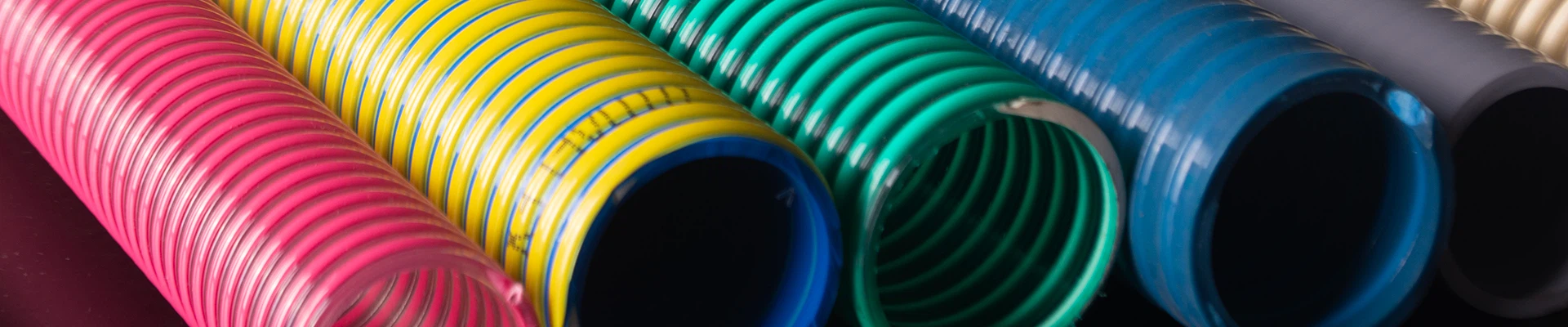
Chemical-resistant hoses are specifically designed for the safe transfer of corrosive substances like acids, solvents, and fuels, and are constructed from specialized materials that prevent degradation and leaks. The choice of hose material is critical, as different materials offer varying levels of resistance to specific chemicals, temperature, and pressure.
Types of chemical-resistant hoses
PTFE (Polytetrafluoroethylene): Known for its exceptional chemical resistance and broad temperature range, PTFE is ideal for handling highly aggressive or corrosive chemicals, as well as high temperatures and pressures. It has a very low coefficient of friction and is FDA-approved for food and pharmaceutical use.
Composite hoses: Made from multiple layers of thermoplastic films and fabrics wound between helical inner and outer wires, these hoses are flexible, lightweight, and resistant to a wide range of chemicals. They are a safe choice because a multilayer construction prevents catastrophic failure.
Rubber hoses: These are versatile hoses for various chemicals, including acids, alkalis, and solvents. The specific rubber polymer determines its resistance properties. Common types include:
EPDM (Ethylene Propylene Diene Monomer): Resistant to acids, alkalis, and many polar solvents, as well as heat and ozone. Not suitable for petroleum-based products.
FKM (Fluorocarbon rubber): Known for excellent resistance to high temperatures, aggressive chemicals, and hydrocarbons, such as those found in the oil and gas industry.
Nitrile (NBR) / Buna-N: Offers good resistance to oils, petroleum products, and fats.
Polyethylene (PE) and XLPE (Cross-linked Polyethylene): PE is very durable and highly resistant to acids, alkalis, and many common chemicals. XLPE offers even better chemical and heat resistance, handling over 90% of industrial chemicals.
Silicone hoses: These offer excellent temperature resistance and flexibility. They can also resist a variety of chemicals, acids, and solvents, making them suitable for pharmaceutical and food processing.
Metal hoses: Typically made of stainless steel, these hoses are durable and ideal for transferring high-temperature and high-pressure chemicals.
How to choose the right chemical-resistant hose
Identify the chemical(s) being transferred: The most important step is to match the hose's material to the specific chemical(s) it will carry. Consult a chemical resistance chart to verify compatibility, as many manufacturers provide them.
Account for temperature and pressure: The operating temperature and pressure must be within the hose's rated limits. Higher temperatures can accelerate chemical degradation, even with a compatible material.
Consider the application:
For corrosive and aggressive chemicals, a PTFE or FKM hose is often the safest bet.
For a wide variety of less aggressive chemicals, an XLPE hose can be a cost-effective option.
For applications with heat, ozone, and weathering exposure, EPDM or neoprene is a good choice.
Check regulations and standards: In industries like food and beverage or pharmaceuticals, ensure the hose meets relevant standards, such as FDA or USDA requirements.
Use compatible fittings: The couplings, gaskets, and other fittings must be made of materials that are also chemically compatible with the media to prevent leaks and failure.
-
![Tank Truck Suction And Discharge Hose]() Tank Truck Suction And Discharge HoseGreen sanitation tanker suction and discharge hose
Tank Truck Suction And Discharge HoseGreen sanitation tanker suction and discharge hose -
![Polyethylene PE Hose]() Polyethylene PE Hose902 Translucent Polyethylene PE Hose
Polyethylene PE Hose902 Translucent Polyethylene PE Hose


We're professional chemical resistant hose manufacturers and suppliers in China, specialized in providing high quality products and service. We warmly welcome you to wholesale customized chemical resistant hose from our factory.
Popular Products


