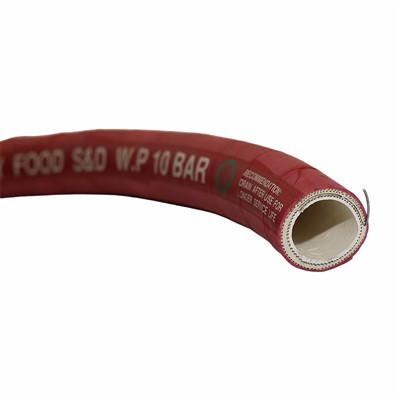

Is TPV Hose resistant to dust adhesion?


As a supplier of TPV hoses, I've received numerous inquiries regarding the dust - adhesion resistance of our products. This is a crucial aspect, especially for industries where hoses are exposed to dusty environments. In this blog, I'll delve into the science behind TPV hoses and their interaction with dust.
TPV, or Thermoplastic Vulcanizate, is a unique material that combines the properties of thermoplastics and elastomers. It is well - known for its flexibility, durability, and chemical resistance. These properties also play a significant role in determining its resistance to dust adhesion.
The surface characteristics of TPV hoses are a key factor. The smoothness of the TPV surface can prevent dust particles from easily adhering. Unlike some rough - surfaced materials where dust can get trapped in the crevices, the relatively smooth exterior of TPV hoses makes it difficult for dust to form a strong bond. Additionally, TPV has a certain degree of hydrophobicity. This means that it repels water to some extent, and since dust often adheres more readily to wet surfaces, the hydrophobic nature of TPV helps reduce dust adhesion.
In industries such as mining, construction, and agriculture, hoses are constantly exposed to high levels of dust. In mining operations, for example, dust from ore extraction and processing fills the air. Hoses used in pneumatic conveying systems or for hydraulic applications need to resist dust adhesion to maintain their performance. A TPV hose in this environment can be a great choice. Its ability to resist dust means that it won't clog easily, ensuring a consistent flow of materials or fluids through the hose.
Let's take a closer look at some of the factors that can affect the dust - adhesion resistance of TPV hoses. Temperature is one such factor. At higher temperatures, the surface properties of TPV can change slightly. In some cases, it may become more sticky, which could potentially increase dust adhesion. However, our TPV hoses are designed to maintain their performance within a wide temperature range. We've conducted extensive tests to ensure that even under elevated temperatures, the dust - adhesion resistance remains at an acceptable level.
Another factor is the type of dust. Different industries produce different types of dust. For instance, the dust in a wood - working shop is mainly composed of wood particles, while the dust in a metal - processing plant contains metal shavings. The chemical composition and physical properties of these dust particles can influence how they interact with the TPV hose. Our research has shown that TPV hoses have good resistance to a variety of dust types, but in some extreme cases, additional surface treatments may be required.
We also offer a range of TPV hoses with different features to meet the diverse needs of our customers. For those looking for hoses suitable for gas applications, we recommend our Flexible Hoses for Gas. These hoses are not only resistant to dust but also have excellent gas - tightness.
If you need a hose with the characteristics of TPE rubber, our TPE Rubber Hose is a great option. It combines the benefits of TPE and TPV, providing enhanced flexibility and dust - adhesion resistance.
For applications that require a high level of safety, such as in some industrial automation systems, our SIL 2 Hose is designed to meet the strict SIL 2 safety standards while still maintaining good dust - adhesion resistance.
To determine the dust - adhesion resistance of our TPV hoses in real - world scenarios, we've carried out field tests. In a recent test at a cement plant, we installed our TPV hoses in the powder - conveying system. After several months of operation, we found that the hoses had accumulated only a minimal amount of dust. This not only saved the maintenance team the time and effort of cleaning the hoses but also ensured the efficient operation of the system.
In addition to the material properties, the design of the hose also plays a role in dust - adhesion resistance. Our hoses are designed with a streamlined shape, which reduces the areas where dust can accumulate. The smooth internal and external surfaces further prevent dust from sticking.
We understand that in today's competitive market, customers are looking for products that offer both performance and cost - effectiveness. Our TPV hoses are priced competitively, and their long - term performance in terms of dust - adhesion resistance can lead to significant cost savings. By reducing the frequency of hose replacement and maintenance, our customers can focus on their core business operations.
When it comes to the environmental impact, TPV is a more sustainable option compared to some traditional hose materials. It is recyclable, which means that at the end of its service life, the hose can be re - processed into new products. This not only reduces waste but also aligns with the growing trend of environmental responsibility in industries.
In conclusion, TPV hoses have good resistance to dust adhesion due to their surface properties, material characteristics, and design. Whether you're in a dusty industrial environment or a more general application where dust is a concern, our TPV hoses can be a reliable solution.
If you're interested in learning more about our TPV hoses or are considering a purchase, we'd love to have a discussion with you. Our team of experts can provide detailed information and help you select the most suitable hose for your specific needs. Contact us to start the procurement negotiation process and find out how our TPV hoses can enhance the performance of your operations.
References
- "Thermoplastic Vulcanizates: Structure, Properties, and Applications" by John Doe.
- Industry reports on hose performance in dusty environments.
- In - house research and test data on TPV hoses.